
Beyond the Festivals: The Quiet, Steady Community Work of Chittaranjan Park Bangiya Samaj
June 24, 2026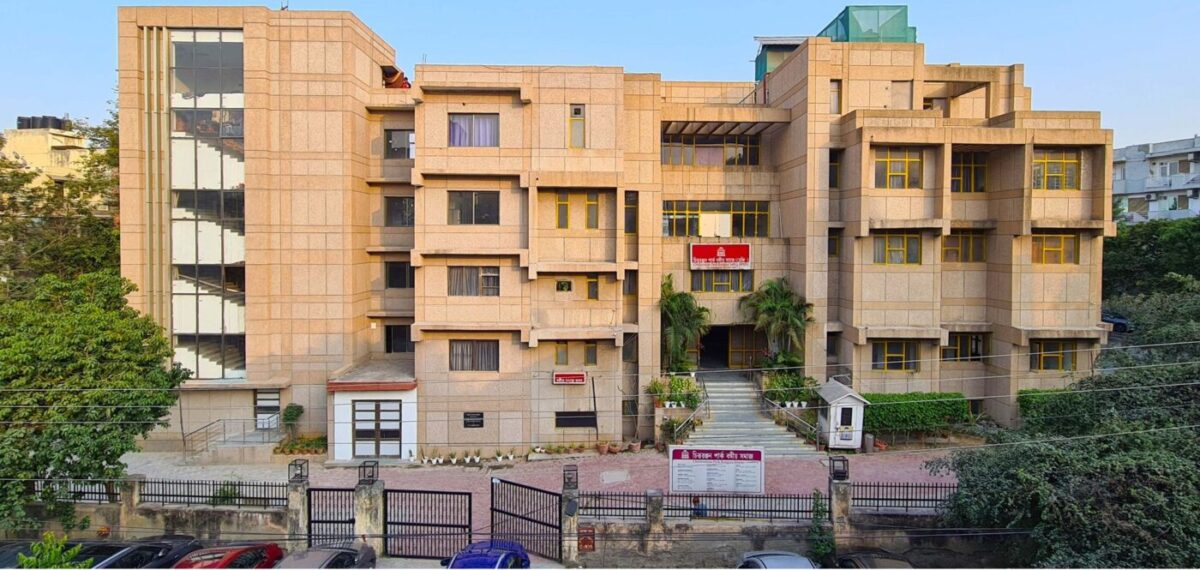
How Chittaranjan Park Became Delhi’s “Mini Kolkata” — and the Role Bangiya Samaj Has Played in It
Ask a Delhi taxi driver to take you to CR Park and there’s a decent chance they’ll mention, unprompted, that it’s “the Bengali area.” That reputation didn’t happen by accident, and it didn’t happen quickly. It’s the result of a deliberate resettlement, followed by five decades of a community actively building institutions to hold onto its own identity — and Chittaranjan Park Bangiya Samaj has been one of the central institutions doing that work.
A Neighborhood Built Around Displacement
Chittaranjan Park — named after the freedom fighter and lawyer Chittaranjan Das — was developed in South Delhi to resettle Bengali families displaced by Partition and, later, by the 1971 Bangladesh Liberation War. Where many resettlement colonies across India eventually lose their original character as new residents move in over the decades, CR Park did something less common: it held onto its identity. Walk through the neighborhood today and you’ll find Bengali sweet shops, fish markets that wouldn’t look out of place in Kolkata, and a calendar of festivals that runs distinctly different from the rest of Delhi’s.
That didn’t happen on its own. A neighborhood retains a cultural identity when its residents build institutions to actively maintain it — and that’s precisely the gap Bangiya Samaj was set up to fill.
Set Up in 1970, on Land the Government Allotted
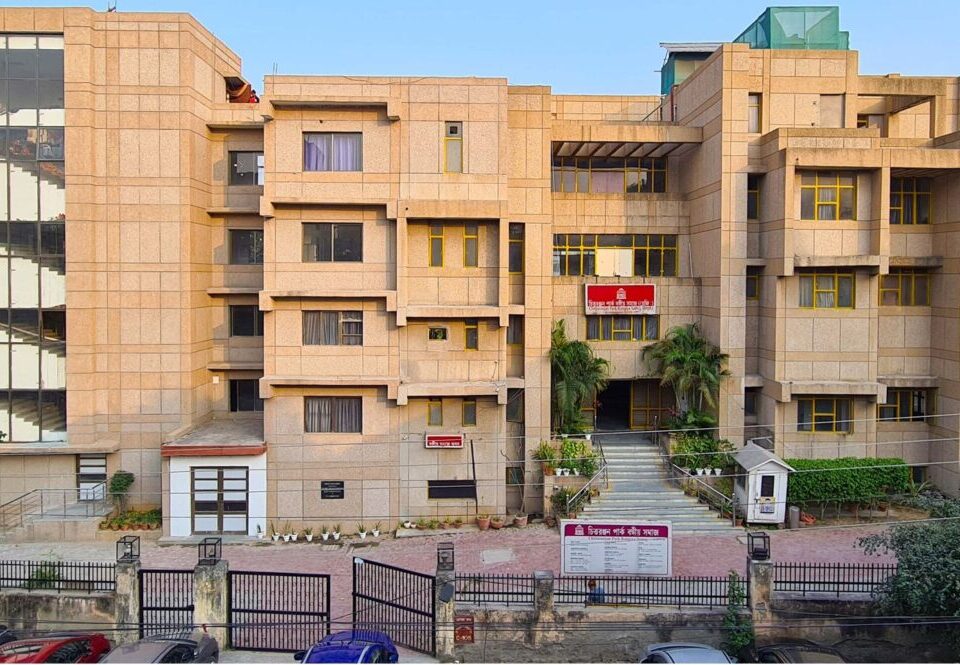
Chittaranjan Park Bangiya Samaj was established in 1970, not long after the colony itself was being settled. The Government of India allotted the Samaj a half-acre plot within CR Park, on which it built the Bangiya Samaj Bhavan — a physical, permanent home for the organization rather than a borrowed hall or a rotating set of living rooms.
That permanence mattered. A community organization with no fixed address tends to depend entirely on whoever is currently running it; the moment leadership changes or interest dips, momentum can disappear. A Bhavan on allotted land gave the Samaj something to build around for the long term — classrooms, a library, space for medical camps, a stage for performances — rather than something it would need to recreate from scratch every few years.
A Mandate That Grew With the Neighborhood
The Samaj’s founding mission was broad by design: art, culture, sports, education and vocational training, with particular attention to the economically weaker sections of the community. That breadth has turned out to be useful, because what a Bengali resettlement colony needed in 1970 wasn’t quite the same as what it needs now.
In the early decades, the priority was straightforwardly cultural — giving a displaced community somewhere to keep its language, music, literature and festivals alive in an unfamiliar city. Poush Mela, Rabindra Jayanti and the literary gatherings that became staples of the Samaj’s calendar all trace back to this period. As the neighborhood matured and its demographics shifted — more retirees, a generation of CR Park-born residents who’d never seen Bengal, new economic pressures — the Samaj’s work expanded to match: scholarships and tutoring for students, medical camps for the elderly, and eventually the Community Medical Support Unit that took shape during the pandemic.
Why a “Samaj” Specifically
The word “Samaj” itself is worth pausing on — it translates roughly to “society” or “community,” but carries a slightly different connotation than either English word fully captures. It implies a self-governing collective responsibility, not a service being delivered from outside. Bangiya Samaj isn’t a charity working on behalf of CR Park’s Bengali community; it’s run by and for that same community, funded substantially through its own members, and governed by an executive committee re-elected from among residents every few years.
That distinction shapes how the organization operates day to day. Decisions about which scholarships to fund, which medical camps to prioritize, or how to structure that year’s Poush Mela aren’t made by an external board — they’re made by neighbors who will be at the mela themselves, whose own children may be receiving the scholarships, and whose own parents may be attending the medical camps.
More Than Five Decades In, Still Doing the Same Job
It would be easy to assume an organization founded in 1970 has either fossilized into ceremony or quietly faded into irrelevance by now. Bangiya Samaj has managed to avoid both. Poush Mela recently marked a Golden Jubilee, a milestone that speaks to longevity, but the Samaj’s calendar has kept adding to itself rather than just repeating — the CMSU is a recent addition, post-pandemic education support was deliberately scaled up rather than left as it was, and the organization’s CSR registration points toward an organization actively looking for new ways to fund its next decade of work, not coasting on the last one.
For a neighborhood that exists because of displacement, having an institution that’s stayed this consistently active for more than fifty years is not a small thing. It’s arguably the reason CR Park is still recognizably Bengali rather than having quietly blended into the rest of South Delhi the way many resettlement colonies eventually do.
Visiting or Getting Involved
Whether you’re a longtime CR Park resident, a Bengali family newly arrived in Delhi, or simply curious about the neighborhood’s history, Chittaranjan Park Bangiya Samaj welcomes visitors at the Bangiya Samaj Bhavan. Details on the Executive Committee, current activities and how to get in touch are available on the Samaj’s Contact and Executive Committee pages.