
Poush Mela at Chittaranjan Park: Delhi’s Biggest Bengali Winter Festival, Decade After Decade
June 24, 2026How Chittaranjan Park Became Delhi’s “Mini Kolkata” — and the Role Bangiya Samaj Has Played in It
June 26, 2026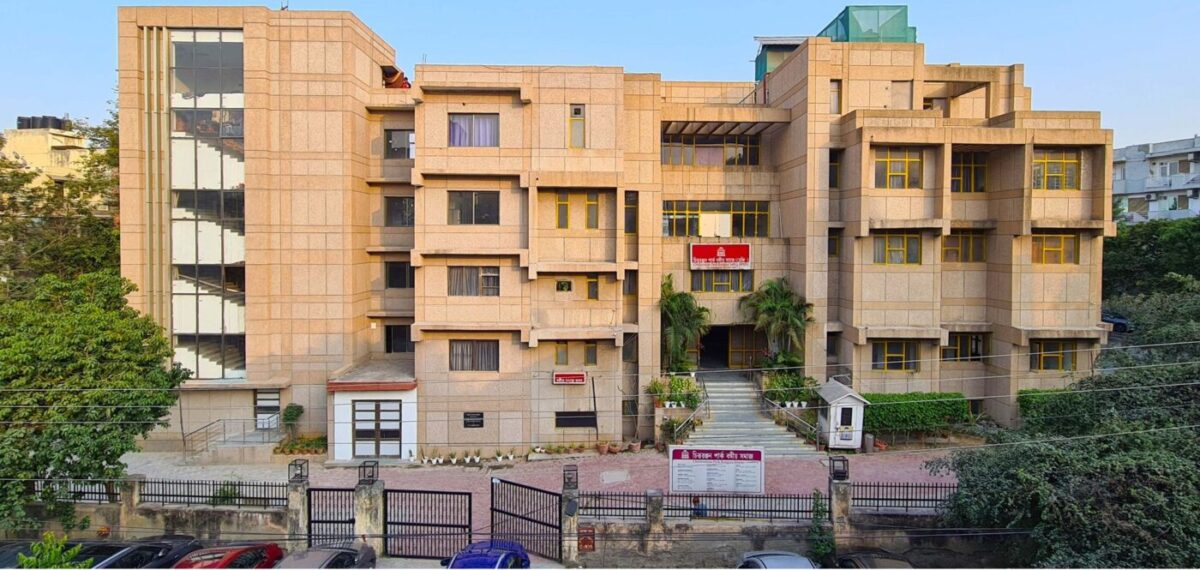
Beyond the Festivals: The Quiet, Steady Community Work of Chittaranjan Park Bangiya Samaj
Mention Chittaranjan Park Bangiya Samaj to most people and the first thing that comes to mind is probably Poush Mela — the lights, the music, the stalls. That’s fair; it’s the most visible thing the Samaj does. But it’s also a small fraction of what actually happens on and around its half-acre campus through the rest of the year. Behind the festival calendar is a second, much quieter calendar — one built around scholarships, medical camps, oxygen supply and tutoring for kids who’d otherwise have nowhere to study.
When the Pandemic Exposed a Gap
The idea for the Community Medical Support Unit, or CMSU, came directly out of the hardest stretch of the COVID-19 pandemic — the period when even basic supplies like medical oxygen became almost impossible to find in Delhi at short notice. Bangiya Samaj, like many community organizations across the city, watched neighbors struggle to access something as fundamental as an oxygen concentrator during a medical emergency, often with no time to wait for hospital systems that were themselves overwhelmed.
Rather than treat that as a one-time crisis to be forgotten once case numbers dropped, the Samaj built a standing unit around it. Today, the CMSU maintains oxygen concentrator machines, oxygen cylinders and pulse oximeters that residents can access when they need them — not as a replacement for hospital care, but as a bridge that can matter enormously in the hours before proper treatment is available. The stated plan is to keep expanding this — bringing in consultation guidance from physicians and sharing reliable medical information with the community, rather than stopping at equipment alone.
Medical Camps That Actually Reach People
Separately from the CMSU, the Samaj organizes regular medical camps aimed specifically at underprivileged and elderly residents — groups who are the most likely to skip a doctor’s visit simply because of cost, mobility, or both. These aren’t token health stalls with a blood pressure cuff and a pamphlet. Camps typically bring in physicians across two or three specializations at once, along with portable diagnostic and lab equipment, so that tests can actually be run and results delivered on the spot, in a single visit. They run at least once a month, and a single camp can serve several hundred people.
The logic is straightforward: if you wait for people to come to the healthcare system, a lot of them simply won’t, for reasons that have nothing to do with how serious their condition is. Bringing the system to them, on their own ground, closes that gap.
Education Support That Goes Beyond a One-Time Donation
The Samaj’s educational work has been running far longer than its medical initiatives, and it operates on a similar principle — meet a recurring need rather than make a one-off gesture. The current support system, expanded significantly after pandemic-era disruptions to schooling, includes:
- Free tutorial and coaching classes, held on Samaj premises, for students who need extra academic support.
- Scholarships and financial assistance to cover textbooks, stationery, guidebooks and materials for competitive exams.
- Help with school uniforms and basic educational kits for families who need it.
- Merit-cum-means scholarships for students from their earliest school years right through to graduation and postgraduate study at colleges across Delhi — awarded based on both academic performance and financial need.
- Extracurricular activities designed to make learning something kids look forward to, not just another obligation.
None of this requires a child’s family to be a long-standing Samaj member or come from a particular background. The eligibility bar is need and merit, not connections.
A Fair That Supports Artisans Directly
One initiative that sits a little outside the welfare-and-health bracket, but is built on the same idea of direct economic support, is the Handloom Fair. Once a year, in the run-up to the festival season — when people are already inclined to spend on new clothes and home goods — the Samaj opens its grounds to weavers, artisans and small manufacturers from across India and from neighboring countries including Bangladesh, Sri Lanka and Nepal.
The fair runs for around 21 days, deliberately timed to catch pre-festival shopping season, giving artisans an extended window to sell directly to buyers without a retailer’s markup eating into their margins. It’s been running for roughly four decades now, long enough to have become something CR Park residents plan their festive shopping around.
Smaller Threads in the Same Fabric
A few other ongoing efforts round out the picture, each modest on its own but consistent over time:
- Environmental initiatives carried out with local resident welfare associations — distributing plants, encouraging tree planting, and working to preserve older trees in the neighborhood.
- Affordable wellness classes — yoga, karate, gymnastics, and Zumba/aerobics — kept deliberately low-cost so they’re accessible to the neighborhood’s economically weaker residents, not just those who can afford a private gym membership.
- A community library, maintained and grown over the years, paired with periodic literary meets that double as informal cultural gatherings.
Why the Structure Behind This Matters
For anyone considering supporting this work directly, it’s worth knowing that Bangiya Samaj operates as a registered society and is registered with the Ministry of Corporate Affairs for CSR purposes, with donation certificates issued under the applicable Income Tax Act provisions for those eligible for tax exemption. The organization’s stated CSR priorities are squarely on art and culture development and educational support for the underprivileged — with plans to grow into skill development and career support for students and artisans as corporate partnerships expand.
None of this work makes for as good a photograph as Poush Mela does. There’s no stage, no lighting rig, no crowd. But it’s arguably the more important half of what the Samaj does — the part that shows up in a family’s life as a scholarship that kept a child in school, or an oxygen cylinder that arrived in time.